

Explainer
10 Key Facts About Tigers and How You Can Help Them Right Now
Find out how you can play your part to help save tigers from extinction.
By Ben Rawson-Jones
March 5, 2024
“Not a single animal benefits from this war,” sighs former G.W. Zoo manager Saff Saffery in Tiger King, as he reflects on the conflict raging within America’s exotic animal business. Amid the docuseries’ clashes, chaos and comedy, it’s easy to lose sight of how perilous things are for the tiger species.
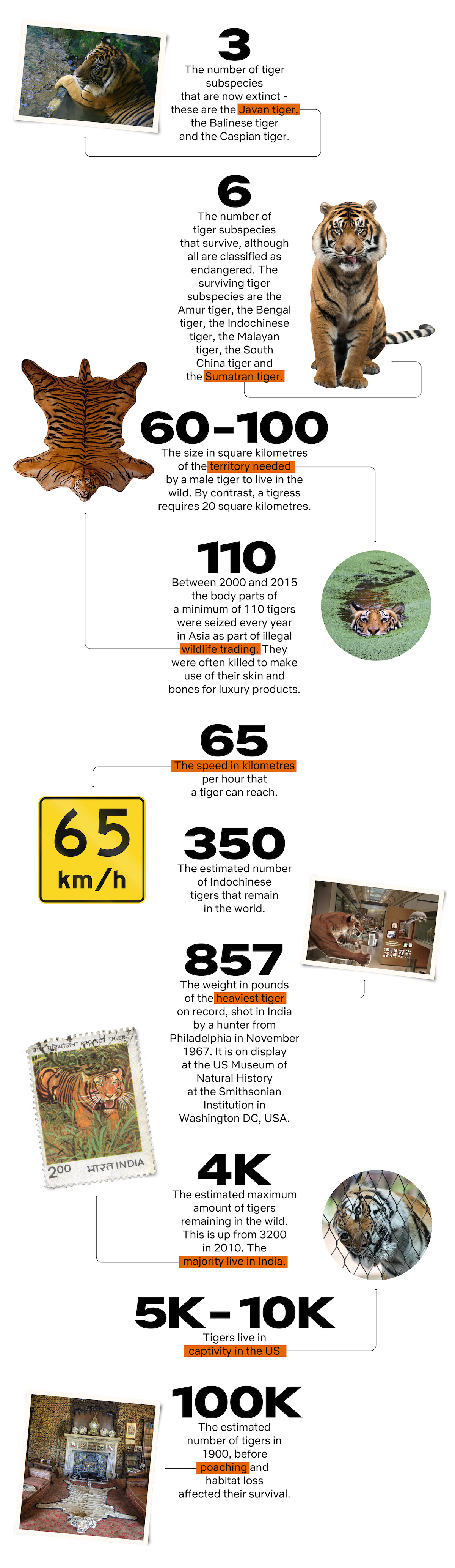
More tigers live in captivity than in the wild, where there are shockingly fewer than 4,000. Thanks to loss of habitat and poaching over the last century, several tiger subspecies are extinct. The few that do remain are endangered, some critically.
It’s understandable to feel helpless about this situation, but there are some little and not-so-little things we can do to help these big cats. Perhaps, if enough of us feel compelled to turn compassion into action after watching the series, some animals might benefit from those Tiger King wars after all.
Here are some suggestions...
Help fund conservation projects.
With a couple of clicks and a bit of generosity, you can financially contribute toward protecting the dwindling natural habitats of tigers. They need vast landscapes to thrive, but these areas are under constant threat.
For instance, the World Land Trust and the Wildlife Trust of India collaborated to crowdfund wildlife corridors that protect Bengal tigers. Endorsed by Sir David Attenborough, their 2014 Big Cat Appeal reached its $680,000 target and supported the Chilkiya Kota Corridor, relocating an entire village to ensure that wildlife could safely travel between conservation areas.
There’s also an ongoing initiative between Save the Tiger Fund and Panthera to increase tiger numbers in specific areas by 50% over a 10-year period. They’re appealing for donations, so if you have a bit of money to spare, then it’s worth investigating this and similar options.
Adopt a tiger.
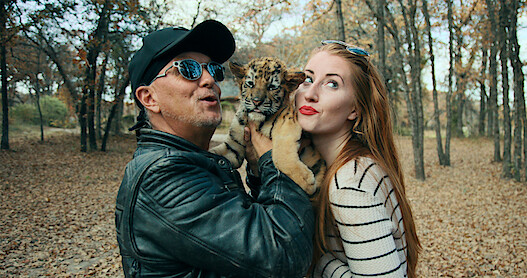
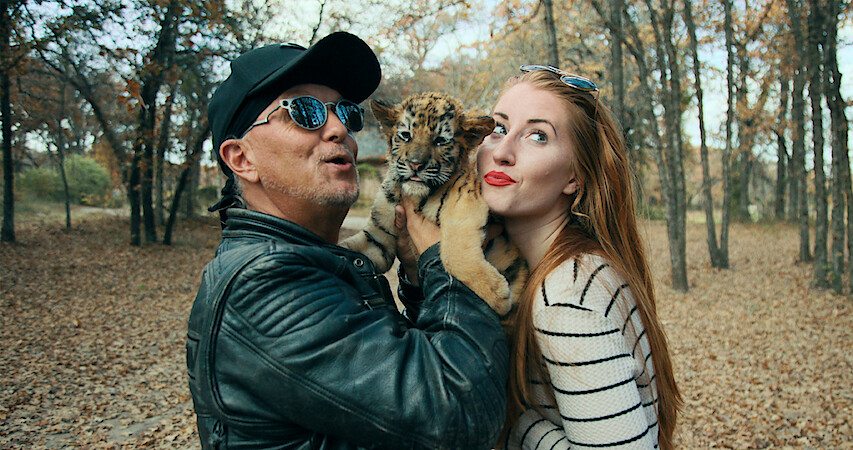
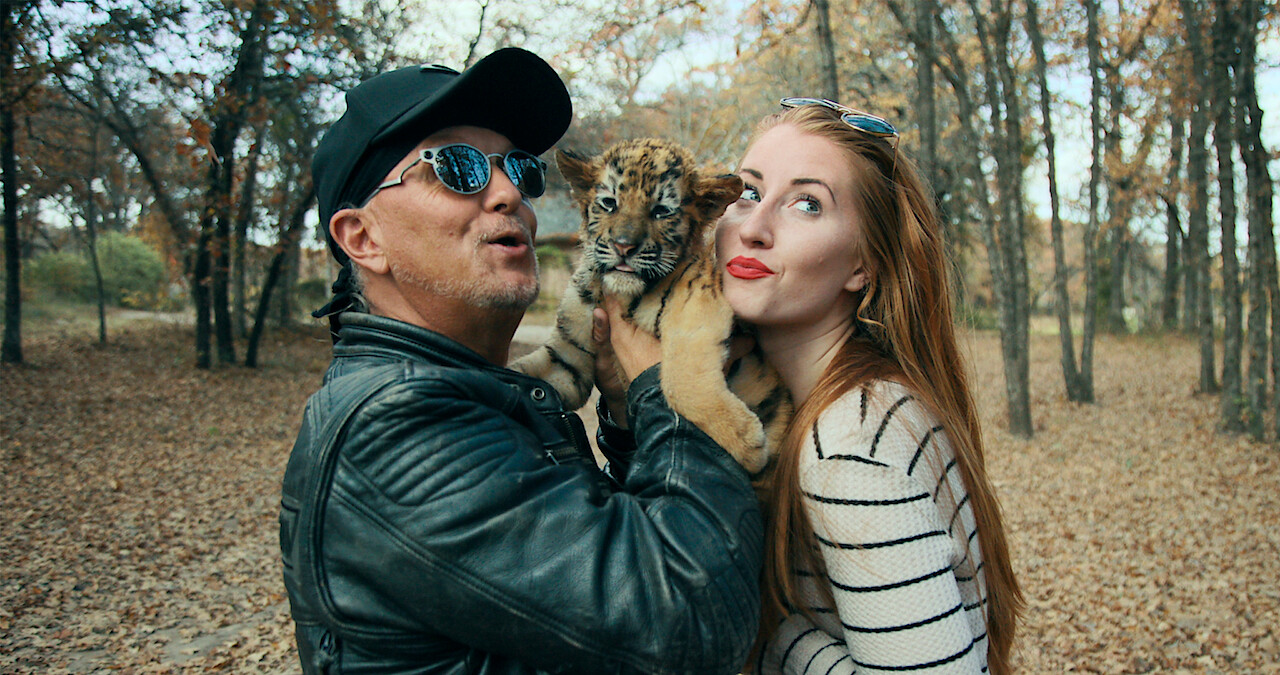
We’re not suggesting you spruce up your spare room, raid supermarket bins for expired meat and let a tiger move in with you. Some relationships are best kept at a distance. Instead, charitable organizations like the World Wildlife Fund and Born Free run “adopt a tiger” programs that enable you to help fund the care of individual tigers and operations such as anti-poaching patrols. You also receive a nice adoption certificate, which is far cooler to post on your social feeds than one of those problematic photos with tiger cubs.
It can feel like one person may not make much of a difference, but if enough caring individuals adopt the right mentality, then those tigers will be roaring — at a safe distance — for a long time to come.
Support businesses that protect the environment.
A number of major companies are responsible for some of the mass deforestation that has adversely impacted wild tigers and other endangered species. A 2020 report from the Zoological Society of London claimed that 54% of the most significant tropical timber and pulp companies haven’t publicly committed to protecting biodiversity and only 37% provided evidence of conservation efforts.
While that sounds depressingly bleak, you do have the power to make a difference by researching and supporting businesses that protect the environment. Strength in numbers can force a positive change.
Choose your medicines wisely.
Tiger bone has been used in traditional Chinese medicine for centuries — and this practice continues despite the number of wild tigers decreasing by 96% over the last 100 years. Tiger bone was removed from the Chinese Pharmacopoeia, the official sourcebook of TCM, about 40 years ago, but tigers are still being killed illegally by poachers.
It ultimately boils down to supply and demand. So if you care, please steer clear of products with tiger parts in the ingredients list, and have a polite word with anyone you know who uses them. They might not be aware of how bad the situation is for wild tigers. Educating the wider public is crucial.
Don’t support private zoos.
The sight of an endangered exotic animal in a cage makes some people see dollar signs rather than feel compassion. That can lead to ruthless exploitation and cruelty. The more these businesses thrive, the more chance there is of other private zoos springing up in the future. You can choose not to support an industry that participates in awful practices, such as declawing cubs and discarding them when they grow too big.
The World Wildlife Fund advises that “often these facilities will allow public contact with the tigers, including photo ops and playtimes with tiger cubs. Not only is the welfare of these tigers compromised, but public health and safety [are] at risk during these encounters.”
Know your local wildlife laws.
The legal measures put in place by governments to protect wildlife vary widely, so it’s worth researching them where you live — and how they compare to laws in other countries. If you’re disappointed by what you find, you can take action by starting or supporting initiatives designed to protect endangered species.
For example, via the WWF, U.S. residents can ask their government representatives to support the Big Cat Public Safety Act, which is designed to prevent captive tigers from being killed for use in various products.
Volunteer.
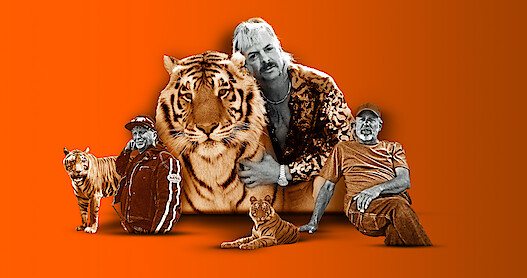
As we witnessed in Tiger King Season 2, more than 100 tigers once belonging to Joe Exotic, Jeff Lowe and Tim Stark were relocated to the Wild Animal Sanctuary in Colorado, offering hope for the quality of their lives. Such sanctuaries often rely on volunteers to stay afloat because it’s expensive to properly feed and care for big cats.
The Tiger King saga may not be the best advertisement for working with big cats, but don’t let that stop you from trying to do the right thing. There are a number of reputable wildlife sanctuaries that need more volunteers to keep going.
Even helping out at rescue shelters for not-so-big cats and dogs is useful, because it promotes a more caring culture toward less fortunate creatures. Acts of kindness can also encourage others to do the same, and that knock-on effect boosts the chances of happiness and survival for all animals — endangered and otherwise — across the world.
Swipe left on those posing with exotic animals.
We can all be a bit petty from time to time. But the proliferation of people on dating apps posing awkwardly with captive tiger cubs is alarming. They may not be total psychopaths, but it’s best not to validate them. Do read their bio first, though, just in case they’re a volunteer at a wildlife sanctuary — in that case, start wedding planning immediately.